
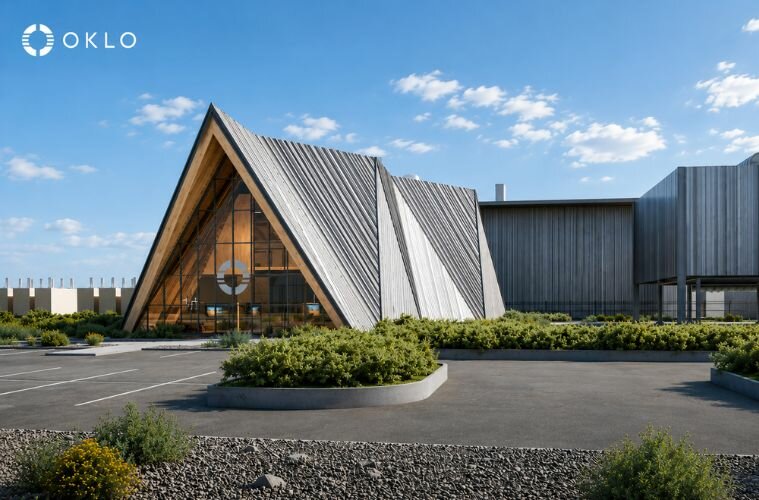
The U.S. Department of Energy's (DOE) Idaho Operations Office approved the Preliminary Documented Safety Analysis (PDSA) for Oklo's Aurora powerhouse at Idaho National Laboratory, advancing the project under DOE's Reactor Pilot Program (RPP). The RPP is a staged authorization framework designed to allow advanced reactor projects on federal sites to build operational experience under DOE oversight rather than waiting for a full commercial licensing pathway through the U.S. Nuclear Regulatory Commission (NRC). Oklo continues to pursue NRC licensing separately for future commercial deployments, and the PDSA approval does not authorize commercial operation.
The reactor approval follows a related milestone from December 2025, when DOE approved a preliminary safety analysis for Oklo's Aurora Fuel Fabrication Facility at the same site, making it the first project approved under DOE's Fuel Line Pilot Program. The pairing is intentional. Fuel availability is one of the most significant constraints facing advanced reactor commercialization: many next-generation designs require fuel forms or enrichment levels that do not yet exist at commercial scale domestically. By advancing both a reactor and a fuel fabrication facility through parallel federal pilot programs at Idaho National Laboratory, DOE is effectively testing an integrated infrastructure model rather than reactor development in isolation.
The timing sits inside a wider federal push to treat advanced nuclear deployment as both an energy security and industrial policy priority. Utilities, grid operators, and large commercial energy buyers, particularly technology companies with firm power needs for AI infrastructure, have increased their interest in advanced nuclear because it offers around-the-clock generation without direct carbon emissions. Most advanced reactor projects remain years from commercial deployment. Programs like the RPP are designed to compress that timeline by generating real operational data, reducing investment uncertainty, and establishing whether the staged authorization model can be repeated across other developers and designs.
Whether the pilot framework actually shortens the path to commercial nuclear at scale remains an open question. What the Oklo approvals demonstrate is that DOE is actively building the infrastructure of that case, one safety authorization at a time.


