

Four months of rainfall deficiencies have pushed water storage and soil moisture to critical levels across eastern Australia, with record lows recorded in New South Wales.

Renewable energy supplier instability is creating counterparty risk that corporate finance and C-suite teams have not priced into existing supply agreements.

A class action against No. 7 Beauty shows how the consumer price premium for sustainable products is becoming a litigation exposure for companies making unqualified environmental claims.

The cost of not investing in climate health systems is quantifiable, and the financial return on investing in them is exceptionally high.
The companies that built their energy strategy around efficiency are discovering a gap between what that strategy promised and what it has delivered.

FYUL is tightening supply chain visibility with TrusTrace. The move comes as brands face rising pressure for product-level proof.

AFRL’s $18M contract will test large-capacity energy storage for Air Force missions. The goal is stronger power resilience in tough conditions.

Scope 3 emissions in supplier networks are outpacing facility-level efficiency gains. New data and GHG Protocol revisions are raising the stakes for sustainability leaders in 2026.

The voluntary carbon market has a credibility problem that is no longer contained to specialized environmental circles.

BioMADE is backing 14 projects with $21.4M in funding. The focus is practical: recover critical materials, improve bio-based production and train workers.

New Mexico launched a public dashboard to monitor its 50-year water action plan as the state faces a projected 750,000 acre-foot shortage

Why flooding, heat, and drought are degrading facility values and restricting insurance access faster than corporate financial models account for.

School districts are expanding solar projects beyond pilot phases. By pairing generation with efficiency upgrades, they aim to cut costs and emissions.

U.S. battery supply chain plans are shifting into real projects. New federal funding is backing domestic electrolyte production and reducing reliance on imports.

Researchers test a vibration based method to scale graphene production with lower energy use. Soon results show faster output and less environmental trade offs.

Crab shell waste may help control how bioplastics degrade in seawater. The approach could improve durability while supporting circular material use.

Uranium demand is rising, but supply remains slow to respond. A Saskatchewan project is testing whether faster development can help close the gap.

Home batteries are now earning income by supplying energy to the grid during peak demand. Programs in Maine highlight their growing role in grid stability.

The GHG Protocol's Land Sector and Removals Standard takes effect January 2027. Its carbon opportunity cost methodology could significantly alter how biomass emissions are reported.
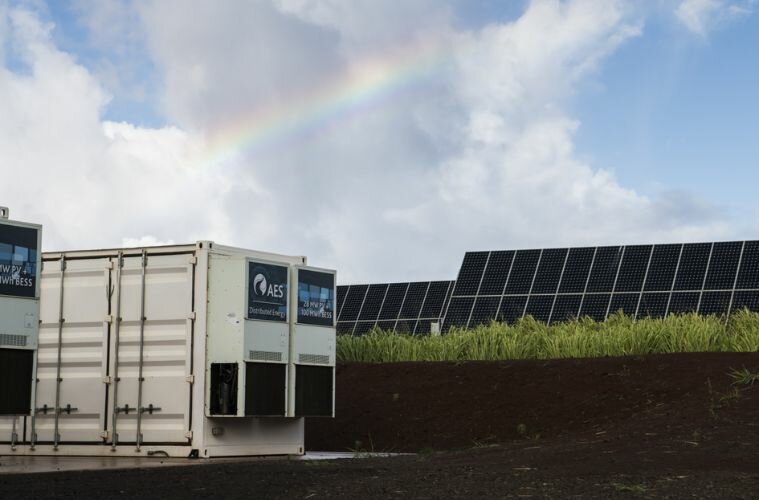
For facilities under grid pressure, on-site generation is no longer primarily a sustainability play. It's the clearest available tool for managing operational risk.