
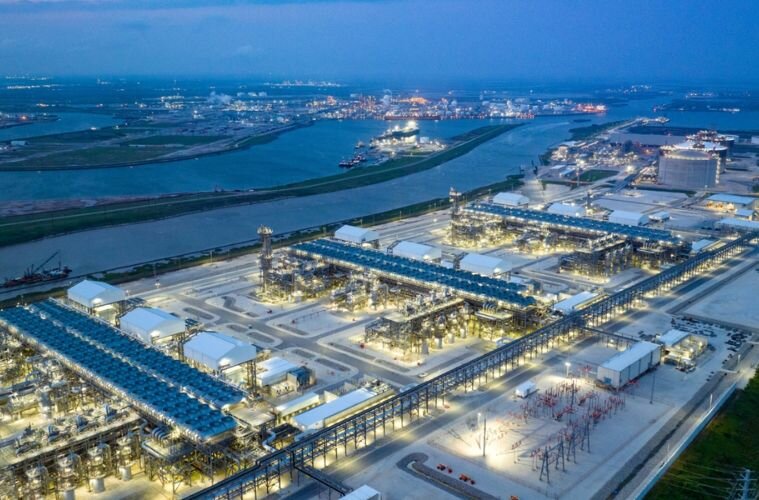
The Federal Energy Regulatory Commission (FERC) opened a scoping period on July 8 for Freeport LNG's Regasification Terminal Disconnect Project, a plan to physically remove the import and regasification equipment at its Quintana Island, Texas facility that the company says hasn't been needed for well over a decade. Public comments on the environmental scope of the project are due by 5:00 p.m. Eastern on August 3, filed under docket CP03-75-000.
The Import Terminal That the Market Outran Before It Finished
Freeport LNG was founded in 2002 to build one of the first new U.S. onshore LNG import terminals in over two decades, at a time when domestic natural gas production was expected to decline and imports looked like a long-term necessity. Construction began in 2005, and the terminal entered commercial import service in June 2008. By 2010, the shale gas boom had already reversed the premise the project was built on, and Freeport LNG pivoted toward liquefaction and export instead. The regasification equipment kept a nominal ability to receive cargoes, but the last import shipment arrived in September 2018, used mainly to keep the storage tanks at operating temperature during export construction rather than to actually supply the domestic market.
What FERC Is Actually Reviewing
The disconnect project itself is a physical teardown: separating the regasification facilities from the liquefaction operation that now runs on the same site, then demolishing and removing the associated piping, equipment foundations, and paving. Freeport LNG expects the work to take about 22 months including design, with removal and modification spanning roughly 12 months, mostly during daytime hours six days a week. The footprint is modest, about 13 acres inside the existing terminal fenceline, all land the company already controls and will keep using for its export operations afterward. The U.S. Department of Transportation's Pipeline and Hazardous Materials Safety Administration has asked to participate as a cooperating agency, and FERC is separately consulting state historic preservation offices under Section 106 of the National Historic Preservation Act.
The Site Became One of the World's Largest Export Terminals Instead
What replaced the import project is the more consequential story. Freeport LNG reused the existing storage tanks, marine dock, and pipeline connections from the import terminal to build out liquefaction trains that began commercial export operations in December 2019, and the facility is now one of the largest LNG export terminals in the country, with a fourth train under development. Other U.S. LNG operators are separately seeking to expand export capacity within their existing footprints, a pattern that echoes how Freeport reused its own import-era infrastructure rather than building an export terminal from scratch.
The regasification teardown is a small, procedural filing on its own. But it closes the loop on a piece of infrastructure that was obsolete almost as soon as it opened, a reminder that energy infrastructure built under one set of market assumptions can become stranded long before the underlying facility itself does. In Freeport's case, the company found a second use for nearly everything except the regasification equipment itself. Companies evaluating new energy infrastructure today are running the same math in reverse, trying to avoid building capacity for a demand picture that could look just as different in another fifteen years.


