

While administrative civil cases are resolving more leniently, criminal enforcement produced its highest defendant count since fiscal year 2016 and resulted in forfeiture exceeding $1 billion in illegal proceeds.

The exposure most EHS teams are carrying right now is not from failing operations. It is from the inability to demonstrate that operations are succeeding.

PIMCO's 2025 Sustainable Investing Report covers $645B in sustainability strategies, 1,300-plus corporate engagements, and expanded ESG and climate frameworks across fixed income.

A UN carbon market decision this week reopens the most scandal-prone credit category in market history. Sustainability teams holding older credits need to review them before auditors do.

Worker heat exposure is moving into mandatory disclosure in Australia, the EU, and several U.S. states at the same time. Most ESG reports have not kept pace. Here is what is changing.

Two Adirondack Park towns passed battery storage moratoriums in March, bringing New York's total to 98. More than 1 GW of planned capacity is delayed as state fire codes and permitting legislation advance.

Federal grand jury charges Synergy Marine Group on 18 counts for the MV Dali Key Bridge allision, including six counts of misconduct resulting in death and environmental violations.

A class action against No. 7 Beauty shows how the consumer price premium for sustainable products is becoming a litigation exposure for companies making unqualified environmental claims.

The companies that built their energy strategy around efficiency are discovering a gap between what that strategy promised and what it has delivered.

Federal and state environmental compliance obligations are converging on 2026 and 2027 deadlines. What C-suite and legal leaders need to understand about the compounded exposure.

Ohio SB 103 is now law, letting natural gas utilities offer alternative rate plans to large industrial users consuming over 1.2 million Mcf annually.

Scope 3 emissions in supplier networks are outpacing facility-level efficiency gains. New data and GHG Protocol revisions are raising the stakes for sustainability leaders in 2026.

The voluntary carbon market has a credibility problem that is no longer contained to specialized environmental circles.
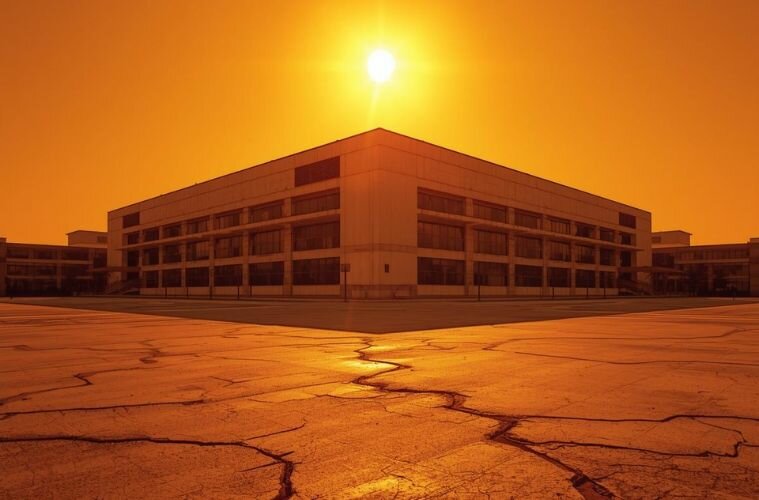
Building energy models were calibrated against climate conditions that no longer exist. Facilities leaders need to understand what that means for efficiency projections and equipment design.

The federal BFPP defense protects brownfields buyers from CERCLA liability, but state programs differ significantly. What EHS and legal teams need to understand before acquisition.

Organizations that haven't conducted a systematic PFAS exposure assessment are making that decision by default, and the cost of finding out later is rising.

The GHG Protocol's Land Sector and Removals Standard takes effect January 2027. Its carbon opportunity cost methodology could significantly alter how biomass emissions are reported.

Utility capacity warnings are no longer background noise. For facilities leaders, they're now a direct constraint on where and when expansion is possible.

EU restrictions and supply chain pressure are pushing labs to replace Triton X-100, turning green chemistry into a procurement and compliance priority.

A new global coalition aims to define sustainability standards for AI data centers as energy and water pressures intensify worldwide.