
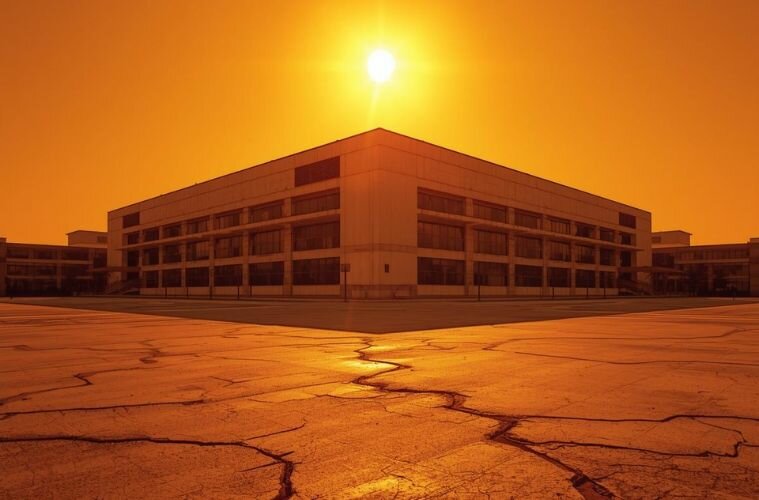
Every building energy model contains an embedded assumption about the climate it will operate in. Heating and cooling load calculations, equipment sizing, ventilation design, and energy efficiency projections are all derived from historical weather data, typically represented through Typical Meteorological Year datasets that average conditions over a 30-year baseline period. The problem is that the baseline period those datasets reflect is increasingly different from the climate conditions facilities are actually operating in.
In markets where extreme heat events are becoming more frequent, more intense, and longer in duration, that gap is not an academic concern. It is a facilities management problem with direct cost and operational consequences.
What Typical Meteorological Year Data Is and Why It Is No Longer Sufficient
Typical Meteorological Year, or TMY, datasets are the standard weather input for building energy simulation software used across the industry, including EnergyPlus, eQUEST, and other Department of Energy-supported modeling platforms. TMY datasets are constructed by selecting representative months from a multi-decade historical record to produce a synthetic year that reflects average conditions across that period.
The original TMY3 dataset, while still found in many legacy modeling tools, primarily draws from weather station records spanning 1976 to 2005. Its successors, such as the NSRDB-derived TMY or updated TMYx files (covering data through 2023), are widely available but have seen varied adoption across different commercial software platforms. Consequently, many building energy models currently in use—including some supporting LEED certification and ASHRAE 90.1 compliance—rely on weather data that is now 20 to 50 years old, potentially underestimating the impact of recent climatic shifts.
Data from NOAA’s National Centers for Environmental Information (NCEI) shows climate trends accelerated through early 2026, with the 12-month period ending March 2026 ranking as the warmest on record for the contiguous U.S.. Following 2025 as the fourth-warmest year, early 2026 recorded its warmest winter for daytime highs and the hottest March, indicating a continued trend of extreme heat and warm nights.
How the Baseline Gap Is Showing Up in Facilities Performance Data
The practical manifestation is straightforward: cooling systems that were sized to handle design-day conditions based on historical weather data are being asked to run at or near capacity more frequently than the original design assumed. Equipment that was specified to cycle during peak demand is running continuously. Chiller plant systems designed around wet-bulb temperature ranges that historical data supported are operating outside their efficient range during heat events that push beyond those ranges.
According to Lawrence Berkeley National Laboratory (LBNL), actual peak cooling loads in high-density markets are exceeding modeled projections by 20% to 35%, driven by grid electrification and thermal saturation of building envelopes during extreme heat. Furthermore, the 2025 transition to low-GWP refrigerants has introduced a performance gap in older retrofits, with many systems struggling to maintain efficiency in high-ambient temperatures, notes LBNL’s Global Cooling Program. That gap represents unplanned operating cost, equipment wear, and in some cases, occupant comfort and safety failures during the events that matter most.
The problem compounds for buildings that completed efficiency retrofits based on modeled energy savings projections. An HVAC upgrade that was projected to reduce cooling energy consumption by 20% may be delivering 10% to 12% in practice, not because the equipment underperforms, but because the baseline load it is operating against is higher than the model assumed.
What This Means for Equipment Sizing and Future Retrofit Decisions
The implication for facilities leaders making capital decisions about cooling infrastructure is direct. Equipment sizing based on historical TMY data is likely to be insufficient for the climate conditions those assets will operate in over their useful life. A chiller or air handling unit specified for a 15-year service life today will be operating in climate conditions that are meaningfully different from the weather file used to size it.
ASHRAE has published guidance on the use of future weather files in building design, and several commercial tools now offer climate-adjusted weather inputs for energy modeling. The challenge is that most procurement and design processes don't require or incentivize their use, and the additional upfront cost of oversizing for future conditions can be difficult to justify against a lowest-initial-cost procurement standard.
What Facilities Leaders Need to Change in Their Capital Planning Process
The adjustment facilities teams need to make is not complicated to describe, even if it requires effort to implement. Building energy models supporting retrofit decisions or new equipment specifications should be validated against recent actual weather data for the facility's location, not TMY historical averages. Where available, climate-adjusted weather files that incorporate projections for the asset's useful life should be used for design-day load calculations.
For facilities already experiencing cooling system performance gaps, the first step is separating the portion of the gap attributable to climate baseline shift from the portion attributable to equipment degradation or operational factors. That distinction determines whether the right intervention is a controls optimization, a maintenance action, or a capital upgrade, and whether the capital case for that upgrade should be built around current conditions or projected future conditions.


