
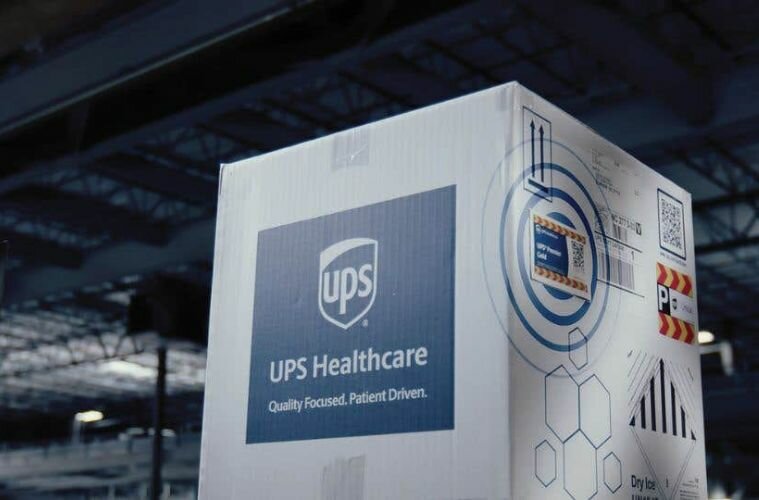
Cold chain failures cost an estimated $35 billion annually and, according to the World Health Organization (WHO), account for up to 50% of global vaccine waste. That figure sits behind a lot of the infrastructure investment happening in pharmaceutical logistics right now, and United Parcel Service's (UPS) latest announcement is a direct response to it. The company is building 27 temperature-controlled freight cross-dock facilities across key markets on four continents, designed to maintain storage at 2°F to 46.4°F, 59°F to 77°F, and frozen during the transitions between air and ground transport. That modal handoff, the moment a shipment moves from a plane to a truck, is where excursion risk is highest and where the new facilities are specifically positioned.
The demand picture driving the investment is specific. GLP-1 drugs like Wegovy and Ozempic, which require refrigeration throughout the distribution chain, have added significant new volume to cold chain networks. Biologics more broadly are projected to grow at an 8.3% compound annual growth rate (CAGR) through 2033, reaching an estimated $39.1 billion market, according to Growth Market Reports data cited by UPS. Cell and gene therapies present an even more demanding logistics challenge: they are often manufactured for individual patients, require strict chain of custody documentation, and cannot be recovered or replaced if an excursion occurs in transit. UPS Healthcare posted $3 billion in revenue in the first quarter of 2026, the first time the division has cleared that threshold in a single quarter, putting it on track toward CEO Carol Tomé's $20 billion annual target.
Why Cross-Dock Design and IATA Certification Matter for Supply Chain Teams
Unlike traditional warehouses, cross-dock facilities are built for speed rather than storage. Shipments move through rapidly between transportation modes, spending as little time as possible on the ground. All 27 new facilities comply with the International Air Transport Association's (IATA) CEIV Pharma certification, the industry's recognized standard for pharmaceutical handling and quality. For supply chain and procurement teams at pharmaceutical companies evaluating logistics providers, CEIV Pharma certification is increasingly a baseline requirement rather than a differentiator, which means the relevant question is what UPS is building on top of it.
The answer is a 24/7 control tower monitoring shipments in real time and a digital twin of the broader UPS network that refreshes every 10 minutes. The company is also deploying radio frequency identification (RFID) technology across its U.S. small package network and applying artificial intelligence (AI) to customs processing, network optimization, and shipment visibility. UPS reported that 97% of international shipments clear customs on the first day of entry, a figure the company attributes partly to AI-assisted documentation processing. The healthcare buildout extends a multi-year acquisition strategy that included Bomi Group in Europe, which added temperature-controlled facilities in 14 countries and more than 350 refrigerated vehicles, along with Frigo Trans, BPL, and Andlauer Healthcare Group in North America, the last of which UPS acquired for approximately $1.6 billion.
What the Pharmaceutical Cold Chain Expansion Signals for Broader Supply Chain Strategy
For operations and procurement leaders outside the pharmaceutical sector, the UPS investment is worth watching as a signal about where infrastructure spending is concentrating. The same pressures reshaping pharmaceutical logistics, tighter temperature and chain of custody requirements, higher product value density, greater regulatory scrutiny of documentation, are showing up in food, chemicals, and advanced manufacturing as well. UPS's announcement comes weeks after the company also committed nearly $50 million to supporting automotive and industrial manufacturers navigating automation and geopolitical supply chain pressure. The pattern is consistent: logistics providers are moving toward specialized infrastructure and integrated digital visibility rather than general-purpose capacity, and companies whose supply chains depend on precision handling are going to find that a smaller number of providers can meet the full requirements.


