
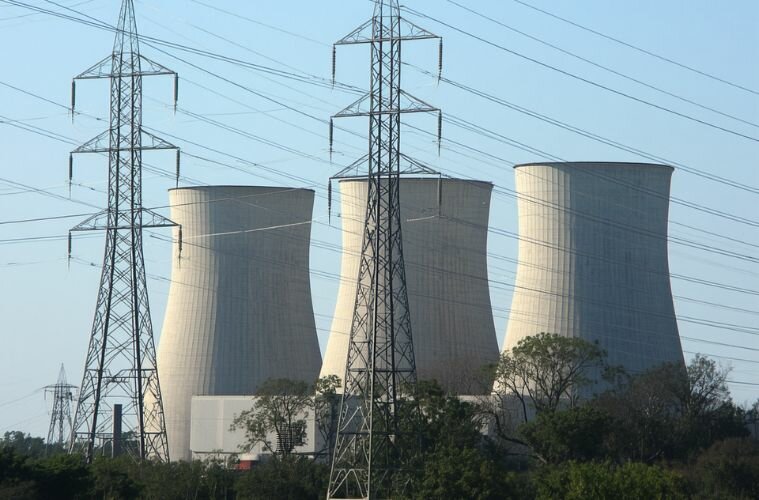
Two states have now written a reliability-first test directly into utility law. Missouri's Senate Bill 4, signed by Gov. Mike Kehoe on April 9, 2025, requires utilities to certify to the Public Service Commission that they have secured an equal or greater amount of accredited generating capacity, fully operational on the grid, before closing an existing power plant, for any closure occurring on or after January 1, 2026. Indiana's House Enrolled Act 1007, signed by Gov. Mike Braun on May 6, 2025, takes a related but distinct approach: it requires utilities to disclose replacement accredited capacity for any planned retirement or refueling, and gives the Indiana Utility Regulatory Commission authority to order a utility to acquire additional capacity, or to block the retirement outright, if an investigation finds the utility's resources would fall short of state reliability and reserve-margin standards.
Neither law explicitly mandates a particular fuel source. Both are built around accredited capacity, the value a regional transmission organization assigns to a resource based on its actual contribution to reliability, rather than nameplate megawatts. Missouri's standard is more restrictive than a simple technology-neutral replacement test, however: at least 80% of the replacement accredited capacity must come from dispatchable resources, and the law bars replacing retiring generation with the wind and solar resources defined as "replacement resources" elsewhere in Missouri statute. That leaves gas, nuclear, hydro, and storage as the qualifying paths, while standalone wind and solar generally do not count toward the requirement.
The legislative shift tracks with strain already visible in regional capacity markets. PJM's Base Residual Auction for the 2027/2028 delivery year, held in December 2025, procured 134,479 megawatts of unforced capacity at the federally approved price cap and still fell 6,623 MW short of PJM's own reliability requirement, the first time the entire footprint has missed that target. MISO's April 2026 long-term forecast projects regional peak load growing from 121 gigawatts in 2025 to 163 gigawatts by 2035, an increase MISO attributes largely to data center and large-load growth. Texas lawmakers considered a related approach in 2025 with Senate Bill 388, which would have required half of new ERCOT generating capacity to come from dispatchable sources; the bill passed the Senate but did not clear the House before the session ended.
For utilities and large energy buyers operating across multiple states, the emerging pattern means retirement timelines are no longer solely a function of a plant's age or a utility's own resource plan. They are increasingly subject to a state-level accredited-capacity test that can delay a closure regardless of what the utility itself had planned. Missouri and Indiana illustrate a broader shift toward embedding resource adequacy requirements directly into state utility law, a trend being watched closely by regulators and utilities facing rapid load growth.


