
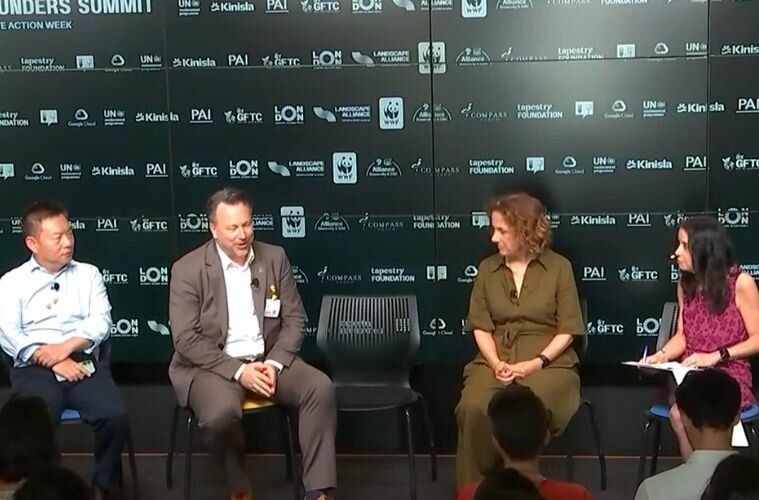
Climate action doesn't wait for COP anymore. That was the clearest signal from London Climate Action Week (LCAW) 2026, which ran June 20-28 across the city and drew participation from policymakers, investors, and corporate sustainability teams navigating a geopolitical environment that has made top-down multilateral progress harder to count on.
Nick Mabey, founder and chair of the LCAW Steering Group, put it directly:
That framing captured much of what the week was about.
LCAW is now in its eighth year and has grown into the largest independent climate gathering in Europe, with several hundred in-person and online events spanning finance, infrastructure, nature, and food systems. It sits within a broader international network that includes Climate Week NYC and feeds into the UN Global Climate Action Agenda. The week opened at the London Stock Exchange before moving to Guildhall for the Climate Innovation Forum, which drew 2,500 attendees and featured speakers including Helen Clarkson, CEO of Climate Group, and Hongpeng Lei, chief of the Climate Mitigation Branch at the United Nations Environment Programme (UNEP).
Why Businesses Are Continuing Climate Investments Regardless of Political Headwinds
Clarkson's message was less about whether companies should act and more about what has changed in how they act. The business case for many climate investments has hardened over the past few years, she argued, making them part of long-term operational planning rather than stand-alone sustainability commitments vulnerable to leadership changes or political shifts. The conversations at LCAW this year reflected that. Infrastructure development, permitting timelines, supply chain resilience, and community partnerships dominated practical discussions far more than headline emissions targets or net zero pledges. That shift in register, from commitment language to implementation language, is itself a form of progress, even when the political environment makes the ambition harder to announce publicly.
UNEP's Food Waste Push and Why 8-10% of Emissions Is an Underused Lever
Lei used his platform to highlight UNEP's Food Waste Breakthrough initiative, launched at COP29 in Baku, as one of the clearer examples of collaborative action moving past high-level commitments into structured implementation. Food loss and waste account for an estimated 8% to 10% of global greenhouse gas emissions, a figure that tends to get less attention than energy sector decarbonization despite representing one of the more immediately actionable reduction opportunities available. The initiative focuses on building government and business capacity for food waste measurement, improving the underlying data infrastructure, and expanding financing for practical implementation. Lei's argument is that food systems are underfunded as a climate intervention relative to their actual impact, and that the pathway from pledge to result is shorter in this space than in many others.
What LCAW's Role in the COP31 Cycle Means for Corporate Strategy Teams
The panelists were consistent about where LCAW fits in the broader calendar. It is not separate from the UN climate process, but it is not waiting on it either. The week functions as part of a year-round cycle that includes Climate Week NYC in September and culminates at COP31 in Antalya, where the COP31 Presidency and Bloomberg Philanthropies announced a new partnership this week to advance implementation ahead of the summit. For sustainability leaders, the practical implication is that the conversations, partnerships, and commitments that shape COP outcomes are not made in the negotiating room. They are made in rooms like the ones LCAW assembled this week, months earlier, by people who have stopped waiting for geopolitical consensus to catch up with what their organizations have already decided to do.


