



Puerto Rico has long struggled with a heavy reliance on imported fossil fuels, which generate 94% of its electricity. In 2022, petroleum-fired power plants supplied 63% of the island’s electricity, followed by natural gas at 23%, coal at 8%, and only 6% from renewable sources. The island consumes nearly 70 times more energy than it produces, resulting in some of the highest electricity rates in the U.S., second only to Hawaii.
The island’s aging infrastructure and high energy costs underscore the importance of transitioning to renewable sources. The devastation caused by hurricanes in 2017 highlighted the urgent need for a more resilient energy system, as the storms severely damaged Puerto Rico’s transmission and distribution networks.
Puerto Rico’s commitment to renewable energy is anchored in the Puerto Rico Energy Public Policy Act (Act 17), passed in 2019. This act mandates the phase-out of coal-fired power generation by 2028 and aims for 100% renewable energy by 2050. However, achieving these ambitious targets requires significant investments in modernizing the grid and scaling up renewable energy capacity.
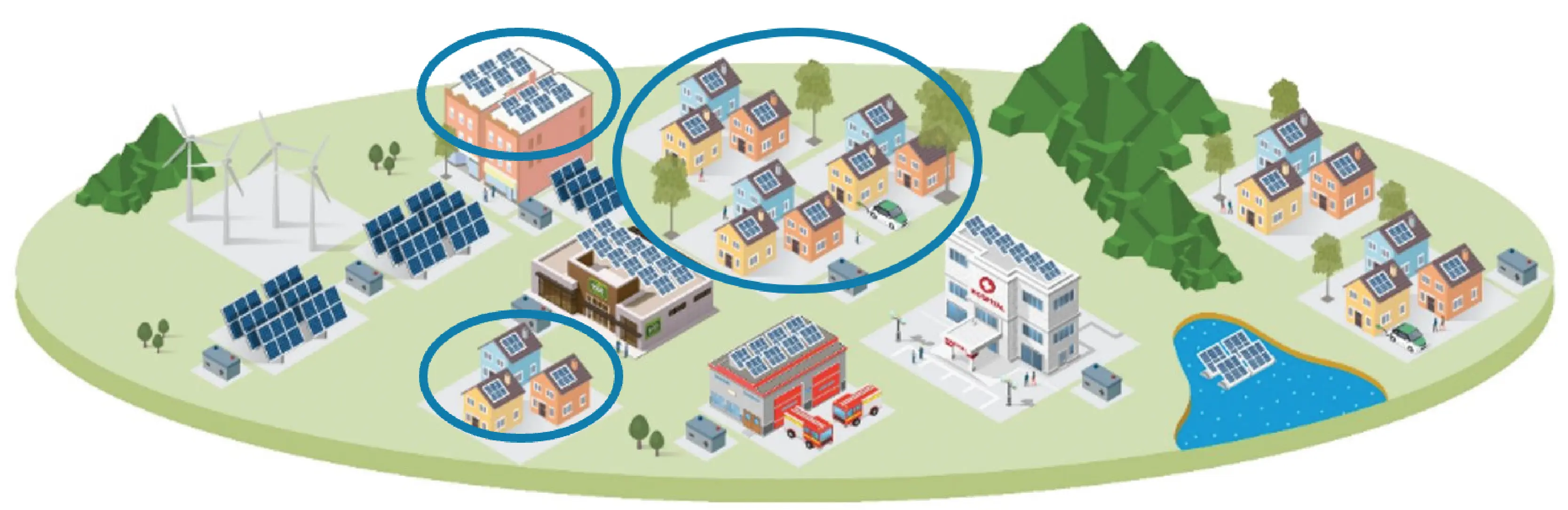
As part of the Biden-Harris administration’s “Investing in America” agenda, the U.S. Department of Energy (DOE) announced a loan guarantee of $861.3 million to support Puerto Rico’s renewable energy transition. This financing will fund two solar photovoltaic (PV) installations and two independent battery energy storage systems (BESS) in the municipalities of Guayama and Salinas, collectively known as the Marahu Project.
These facilities will add 200 megawatts (MW) of solar generation and up to 285 MW of energy storage to the grid, providing clean, reliable energy to Puerto Rican communities. Clean Flexible Energy, LLC, an AES Corporation and TotalEnergies Holdings USA subsidiary, manages the project.
This solar and storage project is expected to generate 460,000 MWh of electricity annually, enough to power 43,000 homes while reducing carbon emissions by 2.7 million tons of CO2e annually. These reductions are equivalent to the emissions from about 533,000 gasoline-powered cars. The ability to store energy will ensure continued power generation even in adverse weather conditions, enhancing the resilience of Puerto Rico’s energy infrastructure.
Beyond environmental benefits, the Marahu Project will provide significant economic advantages. The construction phase will create 750 jobs, with 50 full-time jobs once operational. The initiative also supports the Biden administration’s Justice40 Initiative, ensuring that 40% of the benefits from federal investments flow to disadvantaged communities, including many in Puerto Rico. Residents in the Salinas and Guayama regions, where energy costs are among the highest in the U.S., will particularly benefit from this investment.

Local community engagement is central to the project. AES partners with community development nonprofits and educational institutions to offer training and professional development programs, especially for women and underserved populations. The project’s Community Benefits Plan (CBP), which is being finalized, will outline further efforts to engage and support the local workforce.
The Marahu Project is funded under the Energy Infrastructure Reinvestment (EIR) program, created through President Biden’s Inflation Reduction Act. This initiative aims to replace outdated energy infrastructure with modern, clean energy solutions, positioning Puerto Rico for a cleaner and more sustainable future.
In 2022, President Biden authorized an additional $1 billion for the Puerto Rico Energy Resilience Fund (PR-ERF) to bolster the island’s renewable energy efforts. With projects like Marahu, Puerto Rico is taking meaningful steps towards its 2050 goal of achieving a 100% renewable energy grid while addressing the climate-related challenges that have long impacted the island.


