

When Assembly Member Papan's geothermal package moved through its first two committee hearings in spring 2025 with a combined 32-0 vote, the legislative trajectory looked clear. The centerpiece bill, AB 526, had broad support from developers, utilities, labor, and climate advocates. It wasn't close. Then it hit Assembly Appropriations.
AB 526 died in committee in May 2025, held under submission and ultimately filed with the Chief Clerk in February 2026 under Joint Rule 56. The reason, according to Climate Action California's 2025 session review, was the expected high cost of administration for the planning and coordination mandates the bill required of the California Energy Commission and multiple state agencies. A bill with zero no votes in policy committees was killed by its price tag.
What the Three-Bill Geothermal Package Produced and What It Did Not
The Papan geothermal package included three bills. AB 526 was the strategic planning and permitting framework. AB 527 would have reformed CEQA to treat geothermal exploratory projects and enhanced geothermal system wells as categorically exempt from full environmental review, aligning California's permitting posture with federal standards. AB 531 expanded CEC oversight to geothermal plants below 50 megawatts by allowing them to access the commission's expedited Opt-In Certification program.
Newsom signed AB 531 in October 2025. AB 527 was vetoed and stricken from file in January 2026. The result is that California now has an incremental permitting pathway for small geothermal projects and no strategic plan, no CEQA reform, and no transmission or leasing framework for the utility-scale in-state development that the CPUC's procurement mandates require.
The Out-of-State Problem Has Grown Since the Original Article
When the Papan bills were introduced, the central concern was that California ratepayer dollars were flowing to geothermal projects in Nevada and Utah because those states offered more favorable permitting and regulatory conditions. That concern has not diminished.
In December 2025, Fervo Energy closed a $462 million Series E raise to fund its 400-megawatt Cape Station project in Utah. The project is designed to serve Western grid demand, including California load. Fervo has also been developing its commercial-scale next-generation geothermal operations in Nevada. Both projects are being built in states that California's legislation sought to compete with, using investment from developers who would have been eligible for California's AB 526 incentives had the bill passed.
CPUC Decision 24-08-064, issued in August 2024, directed California load-serving entities and the Department of Water Resources to procure long-lead-time resources including geothermal in volumes beyond what the 2021 mid-term reliability decision established. That procurement mandate is active. The in-state supply chain to fulfill it is not.
Federal Investment Is Accelerating Where State Policy Stalled
The federal picture has moved in a different direction. Congress allocated $150 million to the Department of Energy's Office of Geothermal in its fiscal year 2026 Energy and Water appropriations bill, a 20% increase over 2025 levels and a notable exception to overall EERE budget cuts. The Bureau of Land Management (BLM) has issued new geothermal leases covering more than 100,000 acres across California, Idaho, Oregon, and Utah, and announced two additional lease sales in 2026 in New Mexico and Idaho.
On the transmission side, the Federal Permitting Improvement Steering Council in December 2025 granted expedited FAST-41 permitting to the Silver Rock Transmission project, which connects geothermal generation in Utah to the broader Western grid. That infrastructure investment helps out-of-state geothermal supply reach California, which addresses the reliability mandate but does nothing to reverse the in-state investment and jobs problem the Papan bills were designed to solve.
Where California's Geothermal Strategy Stands Now
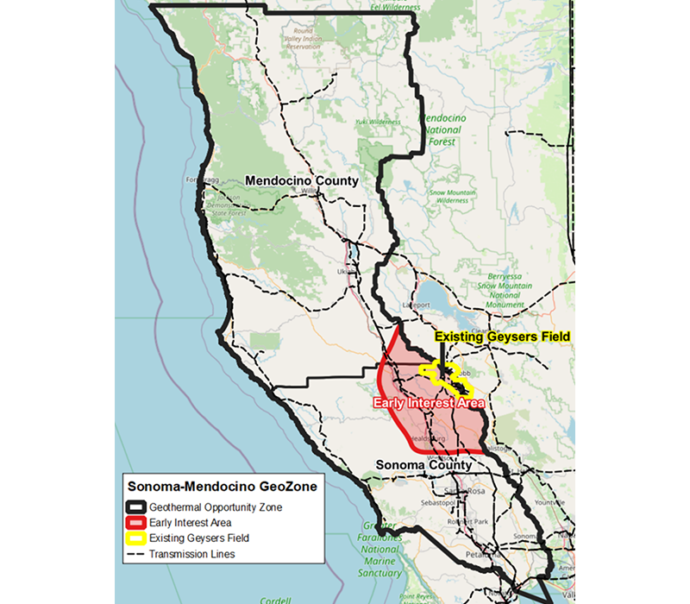
For developers, utilities, and energy planners tracking California, the practical implication is that near-term geothermal procurement filling CPUC mandates will continue to draw on out-of-state projects. Whether a successor to AB 526 re-enters the 2026 legislative session or whether the CEC pursues planning authority through existing channels are the signals worth watching.


