
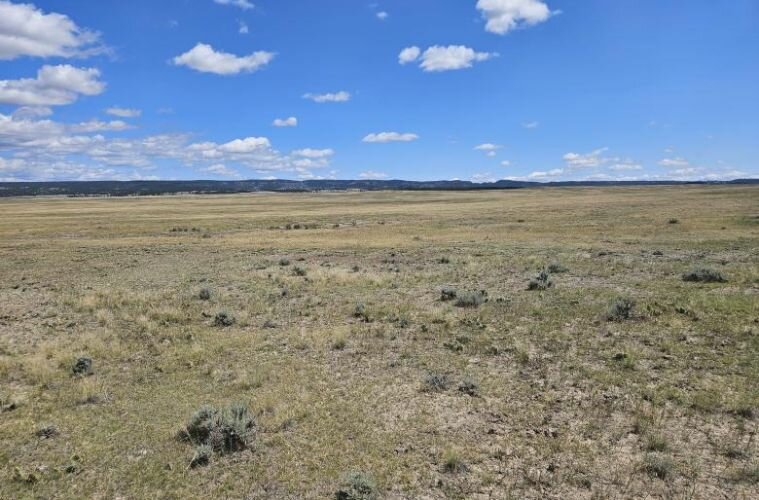
The Bureau of Land Management (BLM) issued a Finding of No Significant Impact (FONSI) and Decision Record authorizing initial infrastructure construction for the Dewey-Burdock uranium project in southwestern South Dakota. The project has been in regulatory review for more than a decade. What the BLM just approved is modest in scope: portions of access roads, four groundwater monitoring wells, and overhead powerlines on roughly 240 acres of federal land within the project's 10,580-acre footprint in Fall River County. The authorized disturbance on federal land totals approximately 4.2 acres. Powertech (USA) Inc. is the developer. The uranium production operation itself would occur on adjacent private property using in-situ recovery (ISR), a method that extracts uranium by circulating groundwater through underground ore bodies and recovering dissolved uranium at the surface. Production wells, processing facilities, wastewater impoundments, and extraction activities are not part of this decision.
What ISR Mining Means for Groundwater — and Why That Question Isn't Resolved Here
ISR leaves a smaller surface footprint than conventional open-pit or underground uranium mining. There are no large waste rock piles or tailings facilities. The tradeoff is that ISR is fundamentally a groundwater operation. Water is injected into the ore zone, uranium dissolves into it, and the solution is pumped to the surface for processing. That makes aquifer protection the central environmental question for any ISR project, and it's the issue that has drawn the most public scrutiny at Dewey-Burdock. The BLM received 764 public comment submissions during the environmental review, covering groundwater protection, cultural resources, tribal concerns, environmental justice, and federal regulatory compliance. The four groundwater monitoring wells authorized in this decision are a first step toward the baseline characterization and ongoing monitoring that regulators use to track whether production-phase operations remain within acceptable limits.
The environmental assessment supporting the FONSI was tiered to the Nuclear Regulatory Commission's (NRC) 2009 Generic Environmental Impact Statement for ISR uranium facilities and its 2014 Supplemental Environmental Impact Statement prepared specifically for Dewey-Burdock. By relying on those existing analyses, BLM concluded that the limited infrastructure authorized on federal lands would not produce significant environmental impacts requiring a full Environmental Impact Statement. BLM inspectors will be required to visit the site at least twice annually during active construction and operations. All design features and conditions of approval are mandatory under the agency's surface management regulations, which require that mining-related activities on public lands prevent "unnecessary or undue degradation."
Domestic Uranium Supply Is Back on the Policy Radar
Dewey-Burdock has been working through permitting since the early 2010s, including NRC licensing proceedings that drew significant tribal and environmental opposition. It is arriving at this moment in a different policy environment than it started in. Electricity demand is climbing from data centers and electrification. Federal investment in advanced nuclear reactor technologies has accelerated. And concerns about uranium supply chain concentration, much of it centered on Russian and Kazakh production, have made domestic U.S. uranium a more active policy conversation than it has been in years. This BLM decision is a narrow approval for infrastructure, not a clearance for full operations. But for a project that has spent over a decade in regulatory channels, getting roads and monitoring wells approved on federal land is not nothing.


