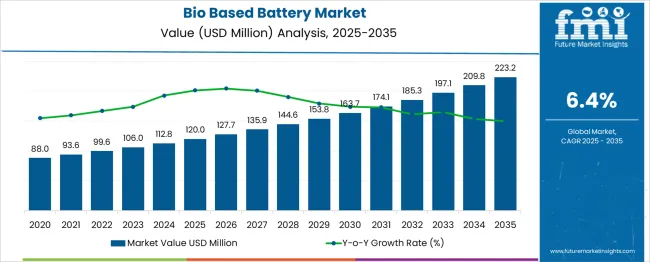
Bio based batteries, made from organic materials such as cellulose, bio-polymers, and enzymes, are attracting interest for their lower environmental impact and compatibility with circular economy principles. They are gaining traction in sectors where safety, biodegradability, and biocompatibility are critical—such as medical devices, biosensors, and wearable technologies.
According to the forecast, the market will see steady early growth through 2030, driven by small-scale electronics and renewable energy niches, followed by faster expansion into grid storage, electric mobility, and consumer electronics between 2030 and 2035. Asia-Pacific is set to be the key growth hub, supported by government incentives and access to raw materials.
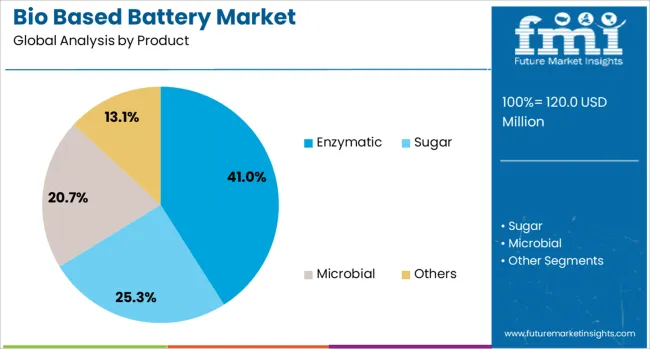
Enzymatic batteries are emerging as the top product segment due to their ability to generate power from organic materials using bio-catalysts, offering biodegradable, heavy-metal-free energy storage. Healthcare adoption is driven by demand for low-toxicity, compact, and physiologically compatible power sources for implants and diagnostics.
China leads with an 8.6% CAGR, backed by strong manufacturing and EV adoption. India follows at 8.0%, leveraging bio based batteries in renewable microgrids and rural energy systems. France, the UK, and the US are focusing on R&D, with applications in smart grids, residential energy storage, and consumer electronics.
Key players include BeFC, Blue Spark Technologies, Sony, Bioo, and NEC. Notably, BeFC has partnered with DS Smith to develop recyclable smart tags powered by biofuel cells, aiming to cut battery waste in packaging. Funding activity, such as BeFC’s €16 million Series A in 2023, signals acceleration toward industrial-scale production.
While scalability and energy density remain challenges compared to lithium-ion systems, advancements in enzyme stability, hybrid designs, and printed battery formats are expected to enhance commercial viability. As environmental regulations tighten, bio based batteries are positioned as a niche but growing alternative in the evolving clean energy landscape.