
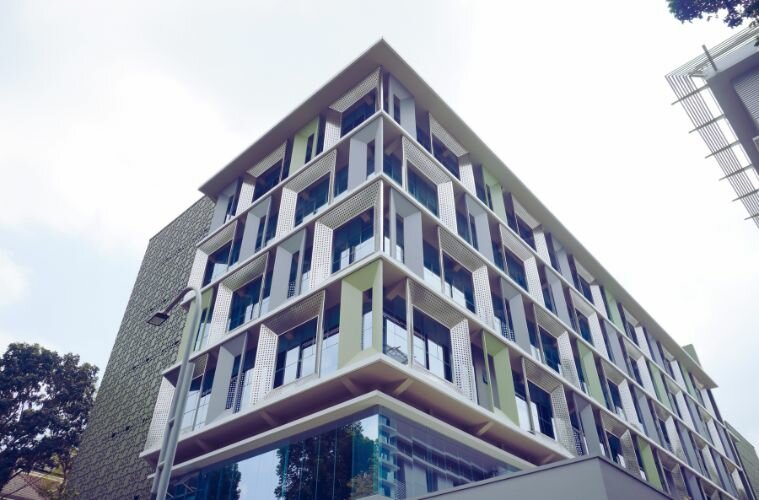
As buildings electrify and demand shifts, facilities teams are encountering infrastructure limits that were never designed to absorb today’s loads.

A new molten-salt reactor project aims to desalinate produced water while generating power. The Permian pilot could redefine industrial infrastructure.

Data centers are testing ways to shift and shape power use in real time. As AI ramps up, flexibility could become key to scaling without grid delays.

RICS data shows planning delays, labor shortages, and cost pressures reshaping how—and how fast—green building projects can move forward.

Mainland China, India, and Canada emerged as the top three markets for LEED certification outside the United States in 2025.

A national study finds PFAS in landfill gas at levels matching leachate. Air emissions may be an overlooked pathway with major regulatory impact.

Restoring low-yield peatlands may deliver climate benefits within decades. New research challenges old assumptions on emissions, land use, and restoration timelines.

TeraWulf’s Kentucky and Maryland acquisitions add 1.5 GW of capacity, reflecting how power availability and grid integration are reshaping data infrastructure development.

A new philanthropic commitment to the Nuclear Scaling Initiative highlights a shift in U.S. nuclear strategy—from one-off projects to repeatable, standardized builds designed to meet rising electricity demand.

Short drone videos and wave analysis now enable fast, affordable current tracking. This new method skips radar and buoys—just video, math, and real-time insight.

FedEx rolled out SAF at two major airports in late 2025, boosting coast-to-coast use. But limited production threatens to slow the sector’s momentum.

AI and cloud growth are accelerating faster than energy planning can adapt. The result is rising costs, delayed deployments, and climate targets under pressure.

Most Americans believe in climate change and feel its effects. Quiet concern is growing—and businesses are being judged on how they respond.

U.S. electricity use is rising fast—and servers, not homes, are driving it. Data centers are shifting the grid's growth, geography, and load patterns.

A new DOE-backed partnership between South Dakota Mines and Idaho National Laboratory is using AI and waste heat recovery to reduce the energy demands of biomass drying.

When expected generation fails to materialize during periods of rapid demand growth, costs and reliability degrade quickly — and the effects cascade across wholesale and retail markets.

AI and advanced data workloads are driving non-linear energy demand, exposing gaps between digital growth and energy capacity.

A new thermal battery delivers high-temperature heat from electricity, not gas. It could help manufacturers cut costs and carbon without overhauling operations.

New market data shows supply chain analytics shifting from optimization tools to foundational infrastructure for risk, resilience, and compliance.

A proposed $1.6B CHIPS Act package for USA Rare Earth highlights how semiconductor resilience is shifting upstream into materials, data, and domestic manufacturing.