
Douglas Liles, an elected Special District Commissioner in South Walton County, Florida, submitted a public comment on June 30 to EPA's docket on its proposal to rescind regulatory determinations for four PFAS compounds: PFHxS, PFNA, HFPO-DA (GenX), and a Hazard Index mixture of those three plus PFBS. EPA's stated rationale is procedural, not scientific, arguing the prior administration combined rulemaking steps the Safe Drinking Water Act requires to happen separately. The PFOA and PFOS drinking water limits are not affected and remain in place. Liles's comment does not dispute that procedural argument. It adds a different kind of evidence to the record: laboratory results showing two of the four compounds already occurring in local wildlife.
The Sample Came From a Stormwater Outfall, Not a Water System
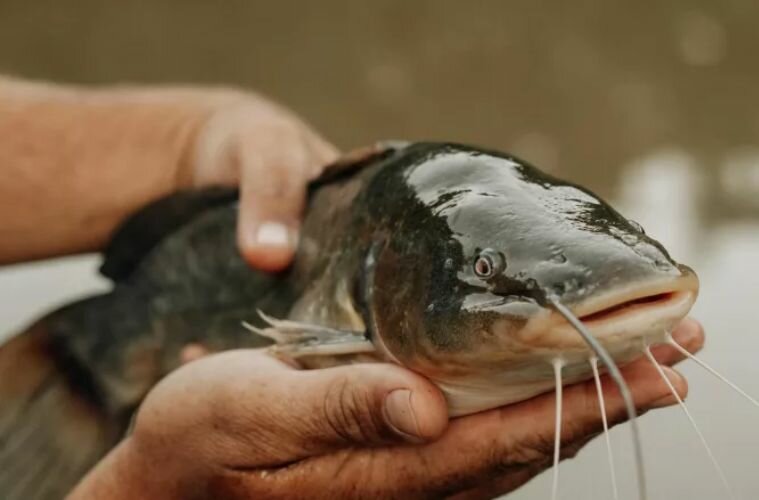
The underlying data came from a composite sample of livers from 13 catfish, collected in April 2024 from a stormwater outfall that drains into Florida's Choctawhatchee Bay watershed. Pace Analytical Services analyzed the sample using EPA's draft Method 1633 and detected 14 PFAS compounds, led by PFOS at 66.1 micrograms per kilogram (µg/kg), a compound whose drinking water limit isn't part of the rescission proposal. The two compounds EPA actually wants to deregulate turned up as well: PFNA at 16.2 µg/kg, the second-highest of anything measured, and PFHxS at 1.2 µg/kg. PFBS, the fourth compound's Hazard Index partner, came in lower still at an estimated 0.43 µg/kg, while HFPO-DA wasn't detected. Total PFAS across all 14 compounds reached 96.7 µg/kg. Notably, the PFNA and PFHxS results were backed by clean method blanks, meaning lab contamination isn't a likely explanation for either detection.
The Comment Stops Well Short of a Health Claim
The comment is explicit that the results describe environmental occurrence, not human health risk. The sample analyzed fish liver, which concentrates PFAS well beyond what accumulates in the fillet people actually eat, and Method 1633 remains a draft method with some values flagged as estimates. The comment asks only that EPA weigh documented occurrence of PFNA and PFHxS in coastal wildlife as part of its evaluation, not that the agency reach any particular conclusion.
Local Data Is Becoming Part of the National Record
The concentrations themselves are not the most notable part of this filing. A single elected official, working from a local nonprofit's lab results, was able to enter site-specific findings directly into a federal rulemaking docket. PFAS liability and disclosure obligations have been expanding faster than the underlying rulebook has stabilized, and that gap between federal statute and local enforcement reality is already showing up as a planning risk for utilities and industrial dischargers. Comments like this one won't decide the rulemaking on their own, but they are part of a growing pattern: local monitoring data is increasingly shaping the record federal regulators have to answer to, whether or not it changes the outcome EPA ultimately reaches.


