
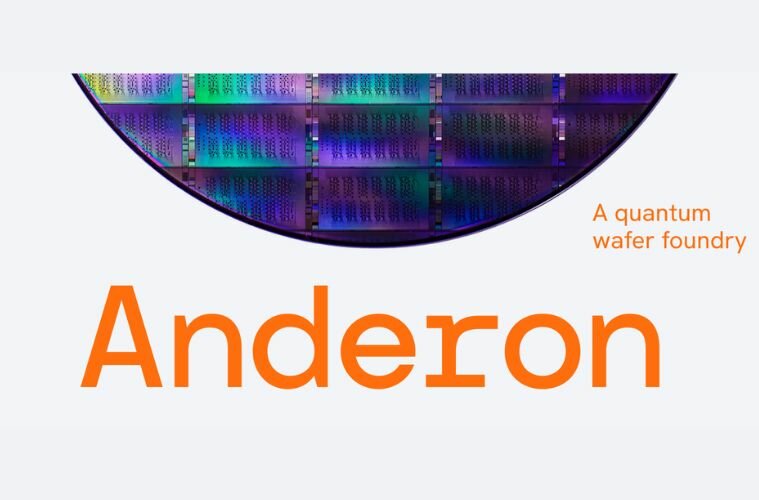
IBM and the U.S. Department of Commerce (DoC) announced this morning that they have signed a letter of intent (LOI) to establish Anderon, a new standalone quantum wafer foundry to be headquartered in Albany, New York. The deal is backed by $1 billion in CHIPS and Science Act incentives from the DoC and matched by $1 billion in cash from IBM, along with intellectual property, workforce, and assets IBM has built over decades of quantum hardware development. Anderon will be America's first pure-play quantum foundry, meaning its entire purpose is producing quantum wafers rather than adapting classical semiconductor lines for quantum use.
The IBM announcement is the largest piece of a broader DoC move today. Citing the Commerce Department, the Wall Street Journal reported that nine quantum companies in total are receiving LOIs for grants totaling $2 billion, with the U.S. government taking a minority equity stake in each. GlobalFoundries is receiving $375 million. D-Wave Quantum, Rigetti Computing, Infleqtion, Atom Computing, PsiQuantum, and Quantinuum are each receiving approximately $100 million. Startup Diraq is slated for $38 million. IBM's allocation, at half the total package, signals where the federal bet is placed.
Why IBM's Foundry Investment in Albany Matters for Domestic Energy and Industrial Manufacturing
The Commerce Department's own framing of the Anderon deal is worth reading carefully. Bill Frauenhofer, Executive Director of Semiconductor Investment and Innovation at the DoC, named the sectors he expects quantum computing to reshape: national defense, advanced materials, biopharmaceutical discovery, financial modeling, and energy systems. That last one is not decorative. Quantum computers are already being applied to grid optimization problems, battery chemistry modeling, and materials discovery for next-generation energy infrastructure. The constraint has been access to hardware and the supply chain behind it, both of which this foundry is designed to address domestically.
IBM has deployed more than 90 quantum systems globally and counts more than 325 Fortune 500 companies, universities, and government agencies among its quantum client base. Its collaborations with the National Institute of Standards and Technology (NIST), Defense Advanced Research Projects Agency (DARPA), and U.S. Department of Energy laboratories position it as the logical anchor for a domestic quantum manufacturing supply chain. The 300-millimeter wafer format Anderon will use is the same standard used in leading classical semiconductor fabrication, which means the facility brings proven scale to a production process that has until now been confined to IBM's internal research operations.
What Anderon Produces and the Timeline to Commercial Quantum Capability by 2029
Anderon will initially focus on wafer fabrication for superconducting qubit technology and supporting electronics, with plans to expand into other quantum computing approaches over time. Superconducting qubits are the same architecture IBM has used in its commercially deployed quantum systems. The foundry structure is designed to serve the broader industry, not exclusively IBM, which means competing quantum hardware companies will have access to a domestic fabrication option they do not currently have. IBM has set a 2029 target for delivering the world's first large-scale, fault-tolerant quantum computer to commercial clients. The quantum computing market is projected to generate up to $850 billion in economic value by 2040, according to IBM's estimates.
The Anderon deal remains subject to final negotiated agreements between IBM and the DoC. The equity stake model follows the pattern of the administration's August 2025 CHIPS deal with Intel, in which the government took a 10% stake in exchange for an $8.9 billion investment. That deal saw Intel's stock gain 380% in the period following the announcement.


