
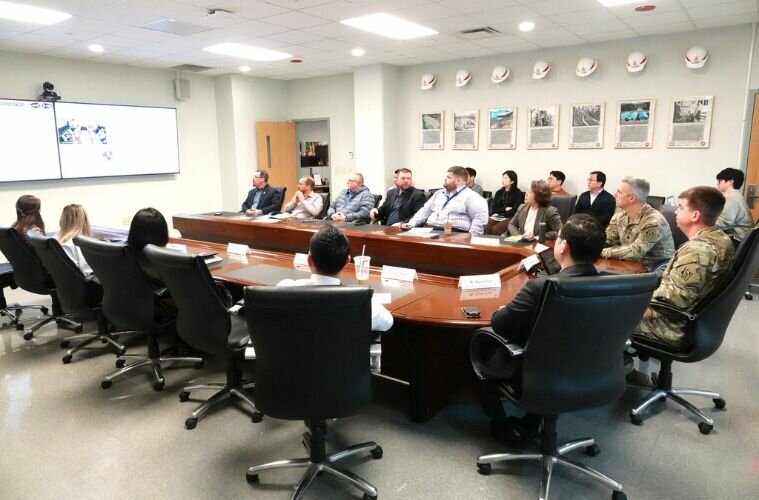
On May 27, the U.S. Army Corps of Engineers Far East District (USACE FED), based at Camp Humphreys in South Korea, became only the 19th organization in the entire U.S. Army to earn the Army Safety and Occupational Health Star. The program it completed, the Corps of Engineers Safety and Occupational Health Management System (CE-SOHMS), took seven years from start to evaluation. Nineteen organizations across the whole Army. That number says a lot about what it actually takes.
The week before, eleven workers died in a white liquor tank implosion at a pulp mill in Longview, Washington. Nippon Dynawave Packaging had two open Occupational Safety and Health Administration (OSHA) complaints on file the morning the tank failed, a prior lockout/tagout citation, and a fire in 2023 that burned for days. The two stories arriving in the same week is an uncomfortable pairing that EHS leaders should sit with.
What a Seven-Year Safety System Process Requires and Measures
CE-SOHMS runs on the Army's Plan-Do-Check-Act model and covers six core capability objectives across 48 measurable criteria, according to research in the International Journal of Construction Management. The three-stage progression moves from policy development through daily implementation and into continuous improvement. The final evaluation involved a four-person team reviewing documents, conducting site visits, and interviewing over 60 district employees. They were looking for evidence that safety was embedded in decision-making, not just written in a policy manual.
The results from districts that have completed the process are measurable. After implementing CE-SOHMS, the Honolulu District reported a 100% reduction in workers' compensation costs and a 142% increase in near-miss reporting, according to the U.S. Army. Near-miss reporting is the leading indicator most safety professionals watch as a proxy for culture health. When it goes up, people feel safe flagging problems. When it stays flat, the problems keep happening without anyone recording them.
OSHA Has 1,651 Inspectors and 191 Years of Work Ahead
The enforcement reality for most industrial facilities is the opposite of that kind of internal vigilance. The AFL-CIO's 2026 "Death on the Job" report found that OSHA now has 1,651 inspectors, 618 federal and 1,033 state, covering 12 million workplaces and 155 million workers. At current staffing, it would take the agency 191 years to inspect every workplace once. The budget works out to $3.85 per worker per year. Nippon Dynawave had complaints in the system. Inspections had not been completed. That is not an exception. It is how the system works for most facilities in high-hazard industries.
CE-SOHMS was designed specifically to replace what USACE described as a "compliance-based approach" with something that actually finds hazards before they fail. Checking the box gets you through an audit. It does not catch a failing tank valve or a sinkhole forming under a drain. The U.S. Chemical Safety and Hazard Investigation Board (CSB) will eventually explain the mechanical cause at Nippon Dynawave. The systematic question is one every EHS leader at a process facility should already be asking.


